Photo: Arpit Sahani
Five questions for reading any World Heritage site: the spatial logic that ordered it, whether its tradition is living or preserved, what is being protected and from what, how it sits within its landscape, and when and how it should be seen.
Kyoto’s seventeen UNESCO World Heritage sites, experienced as they were planned from 794
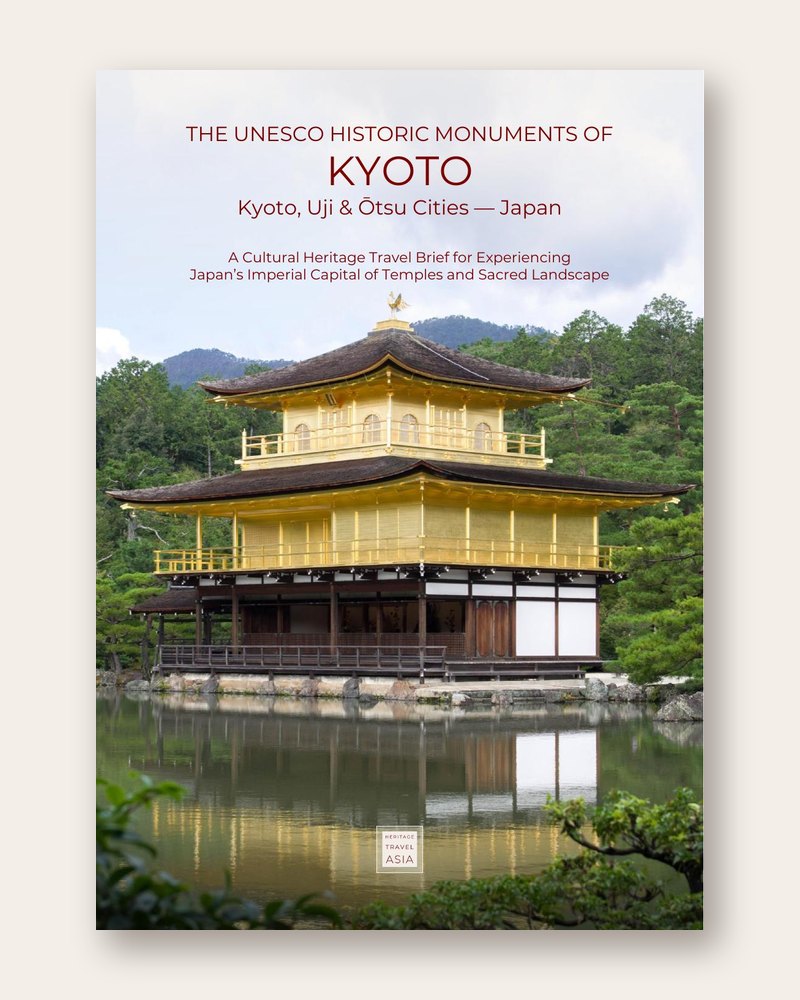
Cultural Heritage Brief
66 pages • $29.99
The complete Brief: five heritage precincts, how each was planned and built, and how to experience them, with maps, shorter stays and practical details
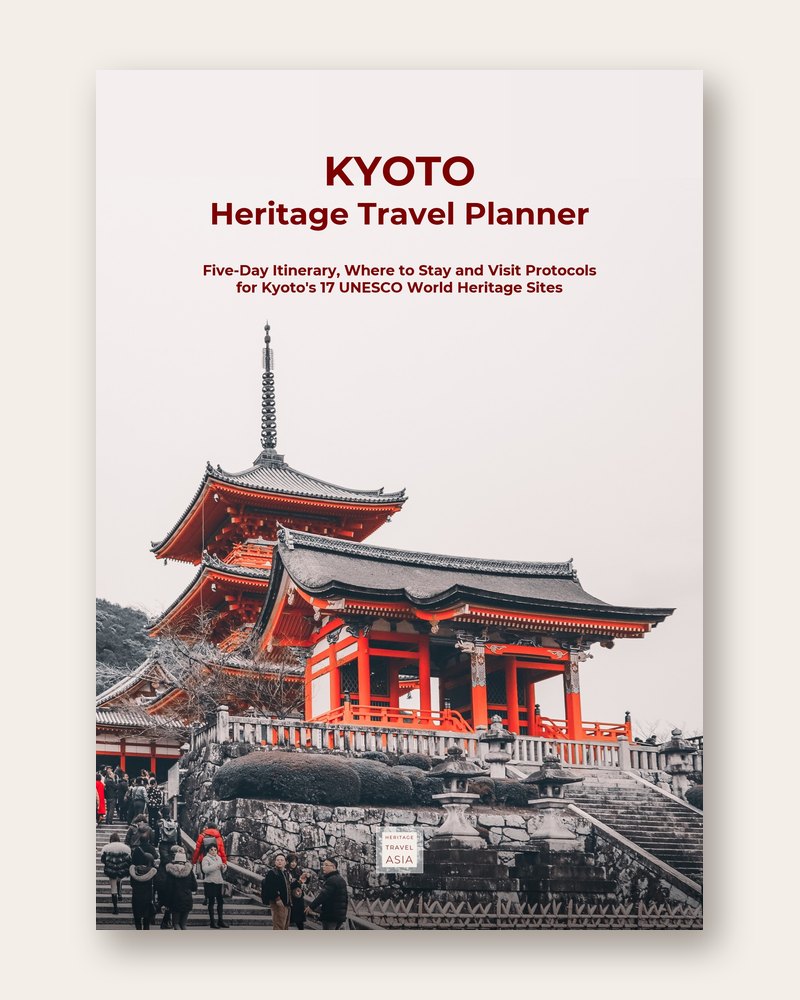
Travel Planner
36 pages • $9.99
A five-day itinerary, where to stay, and visit protocols for Kyoto’s seventeen UNESCO World Heritage sites (Part of Brief)
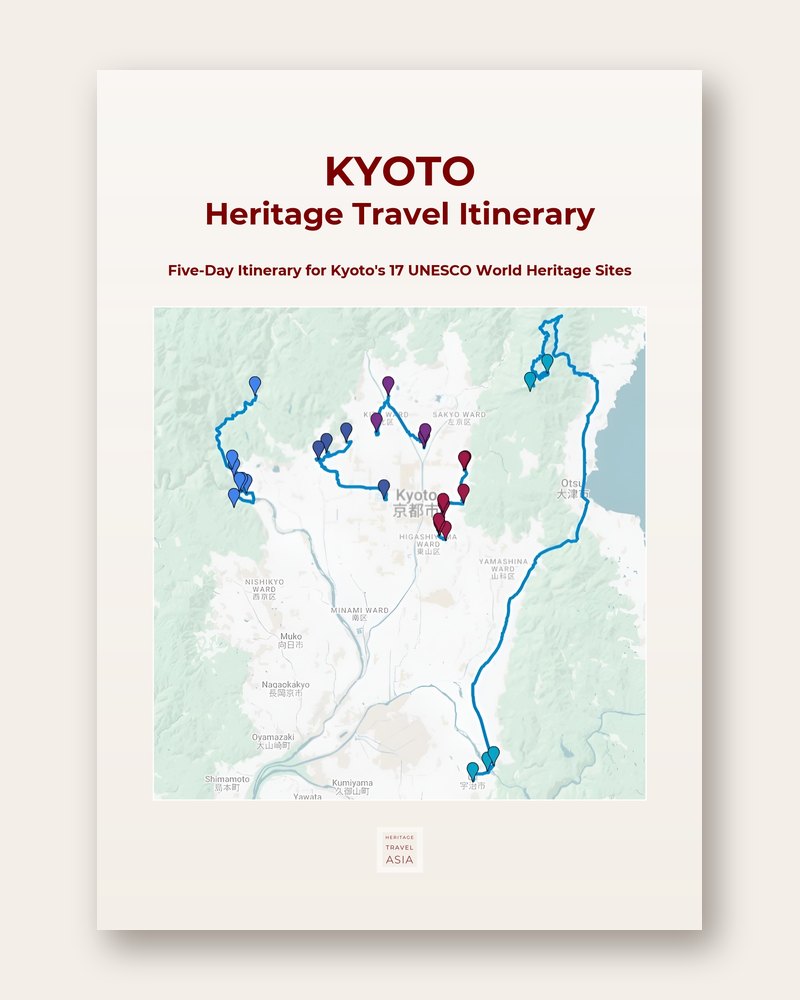
Travel Itinerary
18 pages • $4.99
A five-day route through Kyoto’s seventeen UNESCO World Heritage sites, with maps for each day (Part of Planner)
Travel advisors: an annual licence lets you share Briefs with your clients. Enquire
Planning a cultural journey well takes more than a list of sights. Opening hours shift with the seasons, the great sites crowd at predictable hours, and the place you stay decides what you can reach at the quiet times.
We design your journey personally: one or multiple countries, up to ten days, sequenced by how each place was planned, with the right hour for every site and a place to stay chosen for its position.
Rupak Chatterjee is an architect and urban planner, and has worked internationally in master planning, heritage monument conservation, and regeneration of historic precincts. This work has deepened the understanding of why a heritage precinct was planned and built as it was, and how these precincts can be meaningfully integrated into urban life and strengthen local cultural identity.
Rupak founded Heritage Travel Asia to bring the same understanding of Asia’s UNESCO World Heritage destinations to travellers who want to experience these as they were planned.
© 2026 Heritage Travel Asia. All rights reserved • Privacy Policy • Affiliate Disclosure